Agricultural electrics
The job most domestic sparks decline.
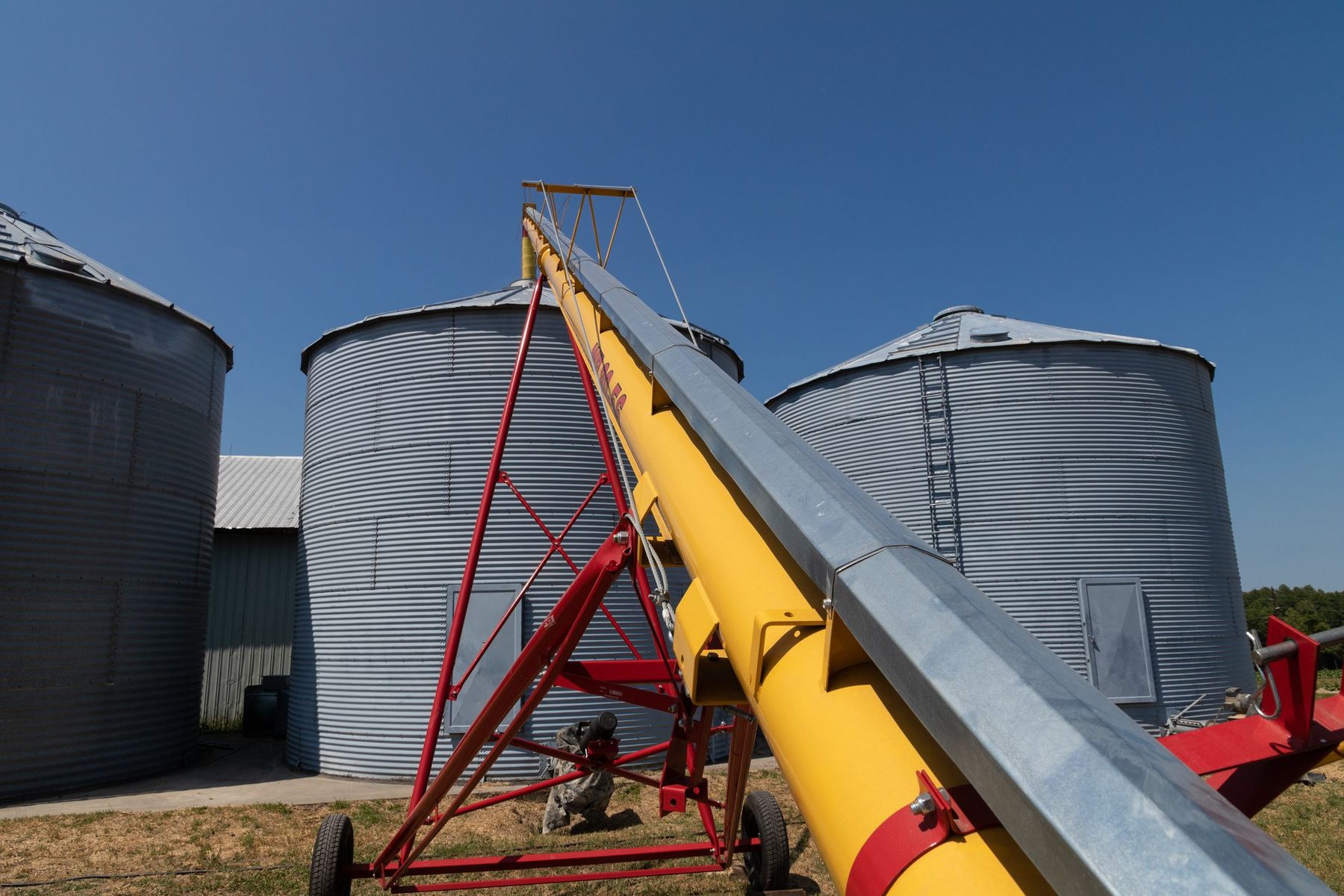
Farms are the part of this business most domestic electricians quietly decline. A grain handling system that has stopped at four in the afternoon in the middle of harvest is not a job you book in for a fortnight's time, and a control panel in a dusty grain store is not a consumer unit in a hallway. We build and install panels, chase machinery breakdowns, run three-phase into barns and workshops, and light yards so the place is usable in December.
What we take on across a farm.
Jobs we actually do, not a list of things we'd be willing to have a go at.
- Control panels for grain handling systems
- Machinery breakdowns and fault finding
- Three-phase supplies to barns & workshops
- Grain store and drying floor installations
- Yard, barn and approach lighting
- Workshop power and isolation
- Periodic inspection of farm installations
- Temporary supplies for harvest
When to ring us.
Some of these are emergencies and some are the ones you already know about and keep putting off. The second sort are much cheaper to deal with in February than in October.
- A grain handling system, drier or conveyor that has stopped mid-harvest
- Control gear that trips on start-up, or nuisance-trips under load
- Three-phase motors running hot, or single-phasing on a damaged supply
- Sockets, isolators and fittings in a grain store thick with dust
- Cable run in a barn that rodents, a telehandler or a hay bale have found
- A yard you can't safely reverse a trailer into between October and March
- An installation that has never had a periodic inspection, on a farm that is now also a business premises
Six kinds of farm job
Panels, breakdowns and the paperwork.
01
Control panels for grain handling
Designed and built for the system that's actually there rather than the one in the catalogue: starters and overloads sized to the motors, interlocking so a conveyor can't run into a stopped elevator, emergency stops where somebody standing on the floor can actually reach them, and enclosures rated for a building full of dust.
02
Machinery breakdowns
The call that matters. Fault finding on driers, elevators, augers, fans and conveyors — starting with the panel and the protection rather than by replacing the most expensive component first. We'd rather get you running again today on a temporary arrangement and come back to do it properly than leave a crop sitting wet.
03
Three-phase into barns and workshops
Supplies to buildings that were never wired for what's in them now: welders, compressors, roller doors, parlour equipment, workshop machinery. Sized for the load and the distance, with the isolation somewhere a person in gloves can find it in the dark.
04
Grain stores and drying floors
Fan and drying floor circuits, level and temperature control wiring, and fittings chosen for dust and washdown rather than for the price list. The rating stamped on a fitting matters far less than where it is mounted and how the cable enters it — which is the bit that gets skipped by people who normally wire kitchens.
05
Yard, barn and approach lighting
Enough light to work, load and reverse safely through the winter, zoned and switched so you light the bit you're standing in rather than floodlighting the village. LED throughout, because the run hours on a farmyard make anything else an expensive habit.
06
Inspection, testing and the paperwork
Periodic inspection of farm installations, certification of new work, and a written report you can hand to an assurance scheme inspector or an insurer without apologising for it. Farms are workplaces as well as homes, and the paperwork side has a habit of being noticed at the least convenient moment.
Why a farm isn't a house
Dust, washdown, vermin and a telehandler.
A grain store is one of the harshest environments anyone wires. Everything is coated in combustible dust, everything gets hosed at some point, rodents find cable that houses never expose, and anything mounted below head height will eventually be reversed into.
So the decisions that matter aren't the ones on the quotation. They're where the enclosure goes, how the gland is made off, whether the containment can be washed, where the emergency stop is reachable from, and whether somebody in gloves at six in the morning can find the isolator.
That's the difference between a farm wired by someone who wires farms and a farm wired by someone who normally does kitchens — and it's why most control panels that get bypassed were installed by the second sort.
What farmers ask us.
Do you come out during harvest?
That's largely the point of doing agricultural work at all. We can't promise an hour, because we're one van — but a farm that has stopped is treated as a farm that has stopped, and we'll tell you honestly when we can be there rather than saying yes and turning up on Thursday.
Can you build the panel, or only install it?
Both. We build and install control panels for grain handling systems — designed round the motors and interlocks that are actually on site, which is usually the difference between a panel that works and a panel that gets bypassed within a season.
Our barn has been extended twice and nobody knows what feeds what.
Very common, and very fixable. We'll trace and record it, tell you what's dangerous, what's merely untidy and what's fine, and give you a proper written view rather than a quote to rip the lot out.
Do you work for contractors and estates as well as owner-occupiers?
Yes — farms, estates and the contractors who work them, alongside our domestic and social-housing work. Ring and describe the site; it's quicker than either of us guessing.